Technical Guide to OEM Air Fryer Production: Engineering, Quality, and Scalability
Superior OEM air fryer production is defined by precision airflow engineering and specialized metal finishing, not just assembly capacity. For global brand managers, the difference between a market leader and a recall often comes down to the consistency of heating elements and the integrity of housing coatings. It's frustrating to face high defect rates or inconsistent performance across production batches when your brand's reputation is on the line.
We understand that navigating the 2026 regulatory landscape, including the EU's strict BPA prohibitions and PFAS limits, requires more than just a standard factory setup. This guide provides a comprehensive technical breakdown of air fryer manufacturing processes, quality benchmarks, and strategic sourcing strategies. You'll gain a clear roadmap for scaling production while maintaining the rigorous safety certifications, such as UL 1026 and IEC 60335-2-9, that your international markets demand.
We'll explore the engineering behind digital basket-style models, the nuances of enamel and powder coating, and the R&D cycles necessary for rapid prototyping. By the end of this analysis, you'll have the insights needed to select a manufacturing partner capable of supporting a global brand in a market projected to reach USD 10.2 billion this year.
Table of Contents
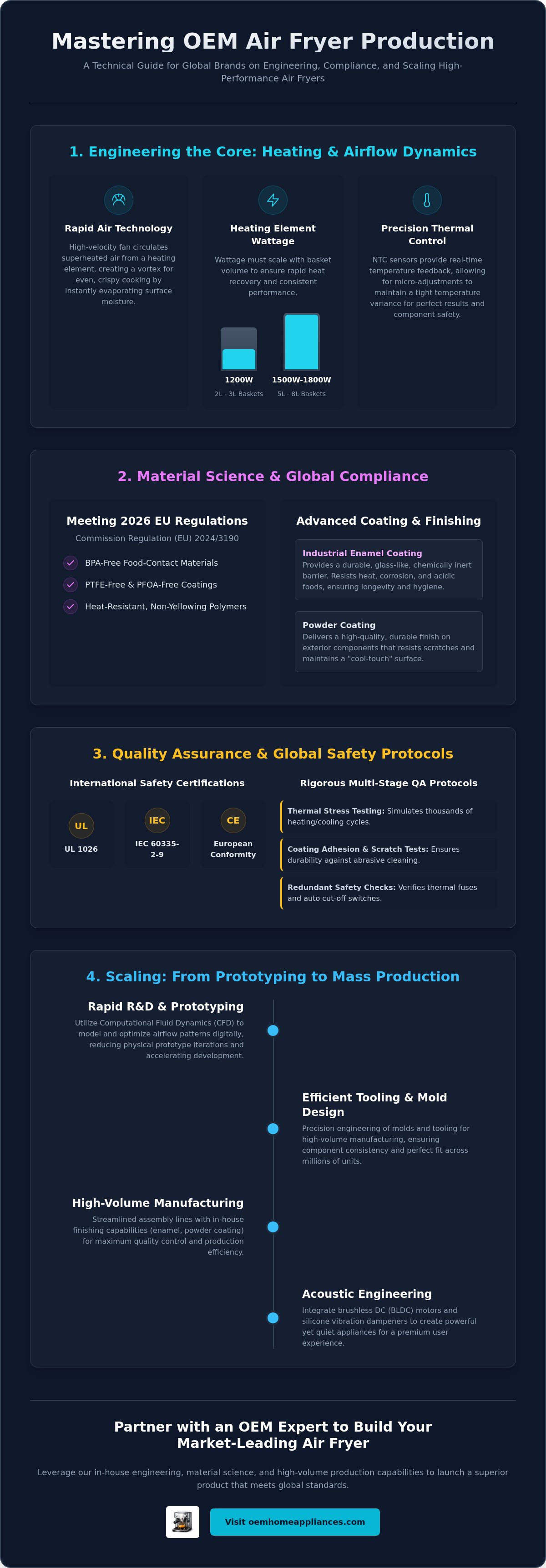
Engineering the Core: Heating Elements and Airflow Dynamics
Successful OEM air fryer production begins with mastering heat transfer. At its core, it's a miniaturized version of convection oven technology, but with significantly higher air velocities. This high-speed circulation, often marketed as Rapid Air Technology, is what creates the "fried" texture without the need for oil. To achieve this, the fan must move air across the heating element and through the food basket at speeds that facilitate instant moisture evaporation on the food's surface.
Optimizing heating element wattage is a critical engineering decision. For smaller 2L to 3L units, a 1200W element is typically sufficient. However, larger family-sized baskets (5L to 8L) require 1500W to 1800W to maintain consistent temperatures under load. If the wattage is too low for the volume, the recovery time after opening the basket causes uneven cooking. We focus on the internal cavity design to eliminate "cold spots." By using curved interior walls and specific "starfish" base designs, we ensure the air swirls upward through the food rather than just hitting the top layer.
Precision thermal management relies on NTC (Negative Temperature Coefficient) sensor integration. These sensors provide real-time data to the control board, allowing for micro-adjustments in power delivery. This level of control ensures the appliance stays within a tight temperature variance, protecting both the food quality and the appliance's internal components.
Thermal Management and Component Longevity
Durability starts with material selection. We use high-grade stainless steel for heating coils to prevent oxidation over thousands of cycles. Consumer safety is non-negotiable; every design includes redundant thermal fuses and cut-off switches. These components meet international safety compliance by automatically killing power if internal temperatures exceed safe thresholds. During the OEM air fryer production design phase, we utilize computational fluid dynamics (CFD) to map airflow patterns. This allows us to identify and resolve turbulence issues before the first physical prototype is built.
Fan Motor Specifications and Noise Reduction
The user experience is heavily influenced by the sound profile of the appliance. We balance motor RPM with decibel levels to ensure the air fryer is powerful yet quiet. For premium market tiers, brushless DC (BLDC) motors offer superior longevity and lower noise compared to traditional AC motors. To further refine the product, we implement vibration dampening techniques. Using silicone gaskets and reinforced motor mounts within the appliance housing prevents the high-speed fan from creating distracting rattles or hums during operation.
Material Science in OEM Production: Finishing and Durability
Material selection is where OEM air fryer production meets regulatory reality. As of July 20, 2026, Commission Regulation (EU) 2024/3190 prohibits the use of BPA in most food-contact materials. Global brand managers must prioritize PTFE-free and PFOA-free non-stick coatings to avoid market entry barriers and meet consumer demand for safer cookware. Beyond compliance, material density plays a critical role in energy efficiency. Denser metals in the basket and cavity retain heat more effectively. This reduces the duty cycle of the heating element, allowing the appliance to consume less power while maintaining the crisping performance consumers expect.
Advanced Enamel and Powder Coating Solutions
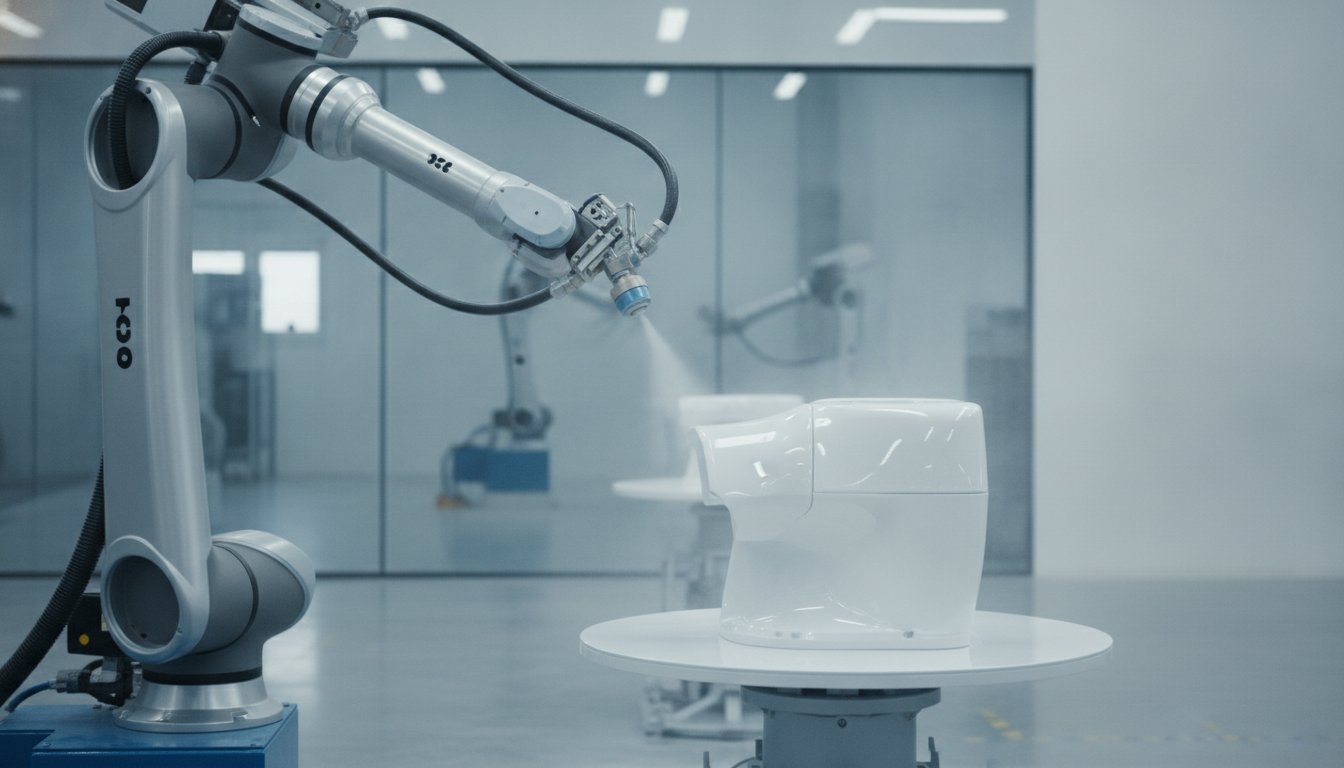
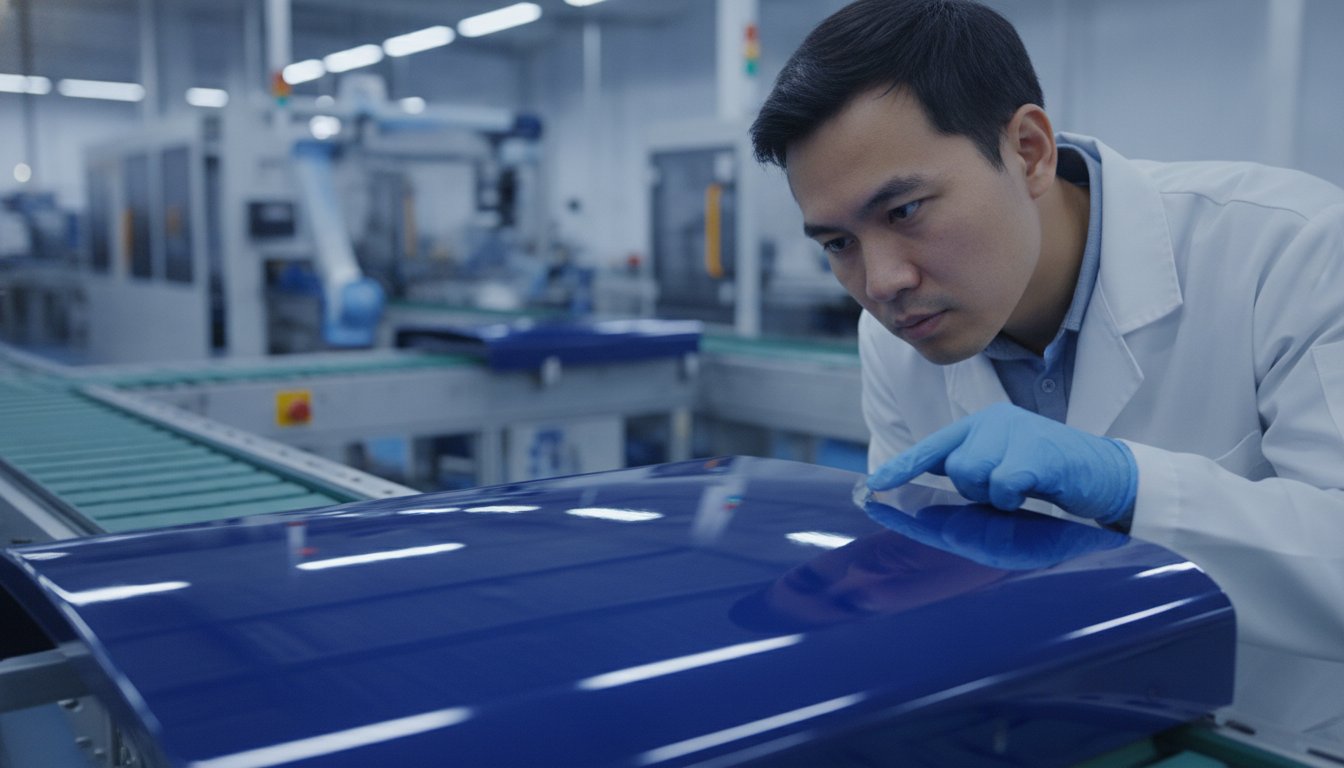
Corrosion is a constant threat in high-humidity cooking environments. Standard coatings often degrade after repeated exposure to steam and acidic food residues. Industrial enamel coating provides a glass-like barrier that is chemically inert and exceptionally heat-resistant. Integrating enamel coated metal components into the internal cavity or heating element brackets ensures the appliance remains hygienic and structurally sound. We verify every batch with adhesion tests and scratch resistance benchmarks. This ensures the product survives years of abrasive cleaning without losing its protective layer.
Housing Materials: Heat-Resistant Polymers and Metals
The exterior housing must remain "cool-touch" while the interior reaches extreme temperatures. We select high-temperature, BPA-free polymers that resist yellowing and brittle failure. For larger 8L+ models, structural integrity becomes a major engineering hurdle. Large plastic housings can warp under continuous thermal stress if they aren't properly reinforced. By incorporating powder coated metal components, manufacturers can achieve a premium, industrial-grade finish. These components offer superior impact resistance and a high-end tactile feel that plastic alone can't replicate.
Global safety standards are more stringent than ever. Organizations like the Consumer Product Safety Commission (CPSC) monitor appliance failures, making material choice a critical factor in risk management. Selecting the wrong polymer or coating can lead to costly recalls and brand damage. If you want to refine your product's material specs, our team can help you navigate these technical choices through our private label manufacturing services.
Quality Assurance Protocols for Global Compliance
Rigorous quality assurance is the backbone of successful OEM air fryer production. While some manufacturers claim low defect rates without explaining their methodology, a reliable partner provides transparent, data-backed testing protocols. We implement a three-tier inspection system: Incoming Quality Control (IQC) for raw materials, In-Process Quality Control (IPQC) during assembly, and Final Quality Control (FQC) before packaging. This ensures that every component, from the heating coil to the digital control board, meets your brand's specific tolerances before it reaches a customer.
Thermal stress testing is the most critical phase for long-term reliability. We subject production samples to continuous operation at maximum temperature for 1000+ hours. This accelerated life testing identifies potential points of failure in the fan motor, heating element, or housing plastics that wouldn't be visible in a standard 30-minute test. For digital models, electromagnetic compatibility (EMC) testing is equally vital. It ensures the air fryer's internal electronics don't interfere with other household devices and remain resilient against external power surges or radio frequency interference.
Standardized Testing for Batch Consistency
Maintaining consistency across thousands of units requires standardized mechanical testing. We use several specialized protocols to verify durability:
Salt Spray Testing: Metal components are exposed to a saline mist to ensure long-term corrosion resistance, especially for units sold in coastal or high-humidity regions.
Drop and Vibration Testing: Packaged units undergo simulated transit stress to verify that internal components and external housings can survive the rigors of global shipping.
Functional Interface Verification: Every digital unit is tested for timer accuracy and touchscreen responsiveness to ensure the user experience matches the technical specifications.
Certifications and Regulatory Roadmap
Navigating international safety requirements is essential for market entry. Most global markets require adherence to the IEC 60335-1 international safety standard, which covers general requirements for household electrical appliances. Beyond electrical safety, OEM air fryer production must comply with RoHS and REACH regulations to ensure all components are free from hazardous substances like lead or mercury. If you're targeting the North American market, Energy Star rating requirements for energy efficiency can provide a significant competitive advantage. Brand managers should prioritize factory audits that verify these compliance capabilities, ensuring the facility has the specialized equipment and trained personnel to maintain these high standards consistently.
Scaling from Prototyping to Mass Production
Transitioning from a technical concept to full-scale OEM air fryer production requires a methodical R&D lifecycle. It begins with high-fidelity CAD drawings that define every internal bracket and external seam. From there, we produce 3D-printed functional prototypes to verify airflow dynamics and component fitment before committing to expensive tooling. This stage is vital for identifying potential design flaws in the housing or internal cavity that could lead to high defect rates during mass assembly.
Once the design is validated, we move to tooling and mold development. We optimize these molds for high-volume injection molding, ensuring they withstand hundreds of thousands of cycles without losing dimensional accuracy. Managing lead times during this phase is a balancing act. While we prioritize production speed to meet market windows, we never bypass quality benchmarks. We also maintain a robust supply chain for critical components like NTC sensors and microchips. This proactive sourcing ensures that global component shortages don't stall your market entry or disrupt your inventory levels.
Customization and Private Label Flexibility
Global brands often need to distinguish themselves through unique industrial design and localized features. We offer kitchen appliance R&D services to help you develop bespoke aesthetics that align with your brand identity. Whether you choose a full OEM route for a unique chassis or an ODM approach for faster market entry, we provide the flexibility needed for success. This includes localized manual production and custom packaging design to meet the specific labeling requirements of different international distribution hubs.
Production Line Optimization
Efficiency on the factory floor is driven by a mix of automated assembly and manual precision steps. In our high capacity rice cooker factory model, we use real-time data tracking to monitor every stage of the build. This same methodology applies to OEM air fryer production lines, allowing us to manage Minimum Order Quantities (MOQ) effectively for brands testing new markets. By tracking real-time output data, we can adjust production schedules to maintain lean inventory while ensuring the capacity to scale rapidly as demand grows.
If you're ready to move from design to global distribution, explore our product design and development capabilities to start your next production cycle with a partner focused on precision and scale.
Strategic Sourcing: Finding the Right OEM Partner
Selecting a partner for OEM air fryer production is a strategic decision that affects your brand's long-term viability. High manufacturing capacity alone doesn't guarantee a successful product launch. You must evaluate a partner's technical expertise and their ability to solve complex engineering challenges. If a heating element fails during thermal stress testing, you need an engineering team that can diagnose the failure at the component level. A factory that simply replaces parts until a unit works lacks the depth required for high-end brand management.
Prioritize partners with in-house metal coating and finishing capabilities. When a manufacturer controls the application of enamel or powder coatings, they eliminate the risks associated with third-party logistics and inconsistent quality. This vertical integration leads to shorter lead times and superior component life. It also allows for tighter quality control over the chemical composition of food-grade coatings, ensuring they remain PFOA-free and compliant with evolving global regulations like the 2026 EU PFAS limits.
Transparency is the foundation of any reliable B2B partnership. A dedicated project manager serves as the bridge between your brand and the production floor. They provide real-time updates on R&D milestones and production schedules, ensuring that technical specifications are never lost in translation. This level of communication is vital for continuous product iteration, such as rolling out firmware updates for digital models or refining airflow designs based on consumer feedback.
Beyond the Factory Floor: Engineering Value
A private label kitchen appliance manufacturer should act as an extension of your own R&D team. They add value by suggesting design improvements that reduce manufacturing costs without compromising quality. Future-proofing is also essential. As the market shifts toward smart homes, your partner should have the infrastructure to integrate IoT features and app connectivity into your product line. Always evaluate a manufacturer's financial stability and global export history to ensure they can support your growth across multiple territories for years to come.
The oemhomeappliances Advantage
We specialize in the high-precision manufacturing of air fryers, roaster ovens, and rice cookers. Our core strength lies in our expertise with enamel and powder-coated metal components, which provide industrial-grade durability for consumer appliances. We don't focus on retail distribution. Instead, we're a dedicated manufacturing partner focused exclusively on B2B brand growth. This singular focus ensures that our resources are always aligned with your success, providing a stable and scalable backbone for your OEM air fryer production needs.
Optimizing Your Global Manufacturing Strategy
Success in OEM air fryer production requires a meticulous balance of engineering precision and regulatory compliance. We've explored how high-velocity airflow and advanced material science, such as industrial enamel and powder coatings, create products that stand out in a competitive global market. Mastering these technical nuances ensures your brand avoids the pitfalls of inconsistent performance and safety recalls. As international standards like the EU's PFAS regulations become more stringent, your choice of a manufacturing partner becomes your most significant competitive advantage.
Our facility provides full-service R&D and product development to help you move from initial CAD drawings to mass production with confidence. We leverage specialized enamel and powder coating expertise to deliver superior component life and a premium tactile finish. With our established global manufacturing and export capabilities, we act as the reliable backbone for your brand's international expansion. Partner with a leading OEM manufacturer for your next air fryer line to ensure consistent quality and industrial-grade durability. We're ready to help you scale your operations and capture your share of the growing global market.
Frequently Asked Questions
What is the typical lead time for OEM air fryer production?
Typical lead times for OEM air fryer production range from 45 to 60 days following final sample approval and deposit. This timeline accounts for material procurement, component manufacturing, and final assembly. Initial R&D and tooling phases for bespoke designs may require an additional 30 to 90 days. We prioritize efficient supply chain management to maintain these schedules while ensuring every unit meets your brand's specific quality benchmarks.
How do you ensure the air fryer heating element meets safety standards?
We ensure heating element safety by adhering to international standards such as IEC 60335-2-9 and UL 1026. Every element undergoes thermal stress testing at maximum temperature for 1000+ hours to verify component integrity. We integrate redundant thermal fuses and NTC sensors to provide precise temperature control and automatic shut-off capabilities. Using high-grade stainless steel for the coils prevents oxidation and ensures long-term reliability in high-heat environments.
Can I customize the digital interface and preset programs of the air fryer?
Yes, you can fully customize the digital interface, touchscreen UI, and pre-programmed cooking logic. Our engineering team works with your brand managers to develop bespoke preset programs for specific food types or regional cooking preferences. This flexibility extends to the firmware level, allowing for unique user experiences that align with your brand's digital identity. We provide functional prototypes to verify the responsiveness and accuracy of these digital controls.
What are the main differences between OEM and ODM in air fryer manufacturing?
OEM involves manufacturing a product based on your brand's unique designs and technical specifications. This gives you full control over the industrial design and internal engineering. In contrast, ODM allows you to select an existing, pre-engineered design from our catalog and apply your private labeling. ODM is ideal for faster market entry, while OEM is better for brands seeking a truly proprietary product with unique features.
How does enamel coating improve the quality of an air fryer?
Industrial enamel coating provides a chemically inert, glass-like barrier that prevents corrosion in high-humidity cooking environments. It offers superior heat resistance compared to standard non-stick coatings and is exceptionally easy for consumers to clean. By utilizing enamel-coated metal components in the internal cavity, we improve the appliance's hygiene and structural longevity. This finishing technique is a hallmark of premium product lines seeking industrial-grade durability.
What certifications are required for exporting air fryers to the US or EU?
Exporting to the US requires UL or ETL safety certifications and FDA compliance for food-contact materials. For the EU market, you must secure CE marking, RoHS, and REACH compliance. As of 2026, products must also meet strict BPA-free and PFAS-free regulations for all food-contact surfaces. Our OEM air fryer production processes are designed to meet these international benchmarks, ensuring your products pass customs and safety audits without delay.
What is the standard MOQ for a custom air fryer production run?
The standard Minimum Order Quantity (MOQ) for custom air fryer production typically starts at 1,000 units per model. This volume allows us to optimize production line efficiency and manage the costs associated with specialized tooling or custom packaging. For highly bespoke OEM projects involving unique chassis molds, the MOQ may increase depending on the complexity of the design. We work with clients to balance production scale with market entry requirements.
How do you handle quality control for large-scale appliance orders?
We manage quality control through a multi-stage inspection process including IQC, IPQC, and FQC. Every production batch is subjected to functional testing, thermal stress analysis, and safety checks before it leaves the facility. We use Acceptable Quality Level (AQL) standards to ensure statistical consistency across large-scale orders. This methodical approach identifies potential defects at the component level, preventing faulty units from reaching your distribution hubs or retail partners.

Comments