Product Design for Kitchen Appliances: 2026 Strategic Trends for OEM Brands

Updated: Jun 24
In 2026, the most successful kitchen appliances won't just look better; they'll be engineered to meet the strictest energy standards in a decade while maintaining mass-market profitability. You likely already feel the pressure of balancing trendy, minimalist aesthetics with the rising costs of mass production. It's a difficult line to walk, especially as new federal compliance standards for microwave ovens and commercial water heaters take effect this year. Effective product design for kitchen appliances now requires a perfect marriage of industrial durability and aesthetic innovation.
We've developed this comprehensive analysis to provide you with a clear roadmap for your 2026 product development cycle. You'll learn how to integrate smart features and induction technology without bloating your bill of materials. We'll also examine how to identify a manufacturing partner that understands design-led engineering, ensuring your brand stays ahead of the curve. From enamel-coated finishes to AI-driven functionality, this guide covers the strategic shifts necessary to dominate the global market while keeping your supply chain lean and your designs scalable.
Table of Contents
The Shifting Landscape of Kitchen Appliance Product Design in 2026
Core Aesthetics: Balancing Minimalism with Industrial Durability
Engineering Performance: Where Design Meets Technical Innovation
Scalable Customization: Design Strategies for Private Label Brands
Partnering for Excellence: Design-to-Manufacturing Workflows
The Shifting Landscape of Kitchen Appliance Product Design in 2026
Modern product design for kitchen appliances has moved past the era of bulky, intrusive machinery. In 2026, the priority is "invisible" integration. This means appliances shouldn't dominate a room; they should complement the environment while delivering multi-functional performance. We're seeing a massive shift from standalone equipment toward ecosystem-ready products. These units are designed to work in tandem, fitting into a broader smart home strategy where every device communicates seamlessly.
Brand managers can't rely on generic "white label" designs to capture market share anymore. Market saturation is at an all-time high. To survive, you must establish brand authority through unique industrial design. This is especially true in the portable cooking segment. If your air fryer looks exactly like every other model on a retail shelf, your only lever is price. That's a race to the bottom that erodes margins. By focusing on bespoke aesthetics and superior build quality, you position your brand as a premium choice. Successful brands in 2026 will focus on three key pillars:
Visual Cohesion: Appliances must match the textures and tones of the surrounding kitchen environment.
Multi-functionality: One unit should replace two or three single-use devices to save counter space.
Ecosystem Compatibility: Products must fit into a connected home framework without complex setups.
The Rise of the 'Integrated Aesthetic' in Portable Equipment
Portable items like roaster ovens and air fryers are no longer treated as temporary counter clutter. They're being redesigned to match high-end cabinetry and modern kitchen textures. We're moving away from high-gloss plastics toward matte finishes and soft-touch industrial materials. These choices reduce the visual weight of the appliance and improve durability against fingerprints and heat. Integrated design is the harmonization of appliance silhouettes with modern architectural lines. This approach turns a functional tool into a design element that stays on the counter rather than being hidden in a pantry.
Consumer Psychology and the 2026 Design Language
Consumer expectations have matured. There's a growing demand for tactile reliability. The weight and resistance of a physical dial matter as much as the digital user interface. It signals precision and quality to the user. In 2026, we're also designing for the "compact kitchen" trend. This requires maximizing internal capacity while minimizing the external footprint through smarter insulation and component placement. It's about engineering efficiency at every level. By applying core industrial design principles, we balance professional-grade performance with domestic-friendly aesthetics. You want the power of a commercial kitchen in a form factor that feels at home in a modern residence. This balance is what builds long-term trust and brand loyalty in a competitive global market.
Core Aesthetics: Balancing Minimalism with Industrial Durability
The 2026 market marks a definitive end to the era of "disposable" plastic aesthetics. Modern consumers now associate weight and material density with long-term quality. This shift requires a move toward permanent-feeling metal constructions in product design for kitchen appliances. By replacing thin plastic housings with robust powder-coated metal components, brands signal value that goes beyond the initial purchase. This isn't just about surface-level looks; it's about structural integrity that survives the rigors of daily use in a high-traffic kitchen environment.
Industrial enamel is seeing a significant resurgence, particularly for high-heat units like roaster ovens and BBQ grills. Enamel provides a glass-like finish that is virtually immune to the yellowing or warping common in synthetic materials. It offers a premium tactile experience that modern buyers crave. We're seeing a trend where personalization and performance-driven design intersect at the material level. Brands that prioritize "repairable" design, where components like heating elements or fans are easily accessible for maintenance, are finding a powerful marketing differentiator. Longevity is the new luxury.
Advanced Material Selection for 2026 Brands
Choosing between stainless steel and custom enamel requires an understanding of your target price point and brand identity. Stainless steel offers a professional, clinical look, but enamel finishes allow for a more bespoke, heritage feel. When implementing powder coating, you must consider the thermal demands of the appliance. High-temperature environments require specific resin formulations to prevent delamination or color shifting over time. For a deeper dive into the engineering requirements of these materials, consult our technical guide on specialized kitchen appliance development.
The Color Revolution: Beyond Stainless Steel
The 2026 color palette moves away from sterile whites and grays. We're seeing a rise in earthy tones, deep metallics, and heritage palettes like forest green or navy blue. Achieving color consistency across different substrates, such as a metal body and a plastic handle, is a major manufacturing hurdle. OEM partners must use advanced color-matching technology to ensure a seamless look across the entire product line. You can use these finishes as a strategic tool for brand tiering. A matte black finish might designate a "Premium" line, while a standard powder coat serves the "Essential" market. This approach allows you to scale your product design for kitchen appliances across multiple price brackets without redesigning the underlying chassis. If you're ready to upgrade your product's finish, our team at oemhomeappliances.com can help you execute these complex material strategies.
Engineering Performance: Where Design Meets Technical Innovation
High-performance product design for kitchen appliances in 2026 depends on engineering that prioritizes thermal efficiency and energy-saving architectures. Aesthetic brilliance won't save a product that fails to meet the stricter energy conservation standards for microwave ovens and commercial water heaters effective this year. You must design internal structures that minimize heat loss while protecting sensitive electronic components. This requires a shift toward sophisticated internal insulation and reflective heat shields that allow for slimmer external profiles without sacrificing power.
Optimizing internal airflow is another critical requirement, especially for air fryers and convection ovens. Use CAD-driven simulations to refine the movement of hot air around the cooking chamber. This ensures even browning and faster cook times, which are key selling points for modern consumers. For specific engineering standards regarding high-heat units, refer to our guide on custom roaster oven manufacturing. This technical approach guarantees that your product delivers on its performance promises while remaining energy-compliant.
User Interface (UI) and Interaction Design
The 2026 design language favors a move away from mechanical switches and physical buttons. Most premium brands now utilize capacitive touch panels with haptic feedback to provide a high-end feel. When designing for global markets, prioritize universal icons over localized text to ensure a consistent user experience across different regions. Safety remains a primary concern in product design for kitchen appliances. You must implement auto-shutoff features and cool-touch surfaces that function flawlessly without compromising the sleek, handle-less silhouettes currently in demand.
Prototyping and Technical Validation
R&D cycles have accelerated thanks to 3D printing and rapid prototyping. These tools allow you to test physical form factors and internal fitment in days rather than months. Thermal testing is the most vital stage of this process. You must ensure that a beautiful exterior doesn't lead to internal component failure due to poor ventilation. Technical validation is the process of proving a design's safety and efficiency before mass production begins. By conducting rigorous stress tests during the prototyping phase, you avoid costly recalls and protect your brand's reputation for reliability. This methodical approach to engineering ensures that every innovation is both manufacturable and market-ready.
Scalable Customization: Design Strategies for Private Label Brands
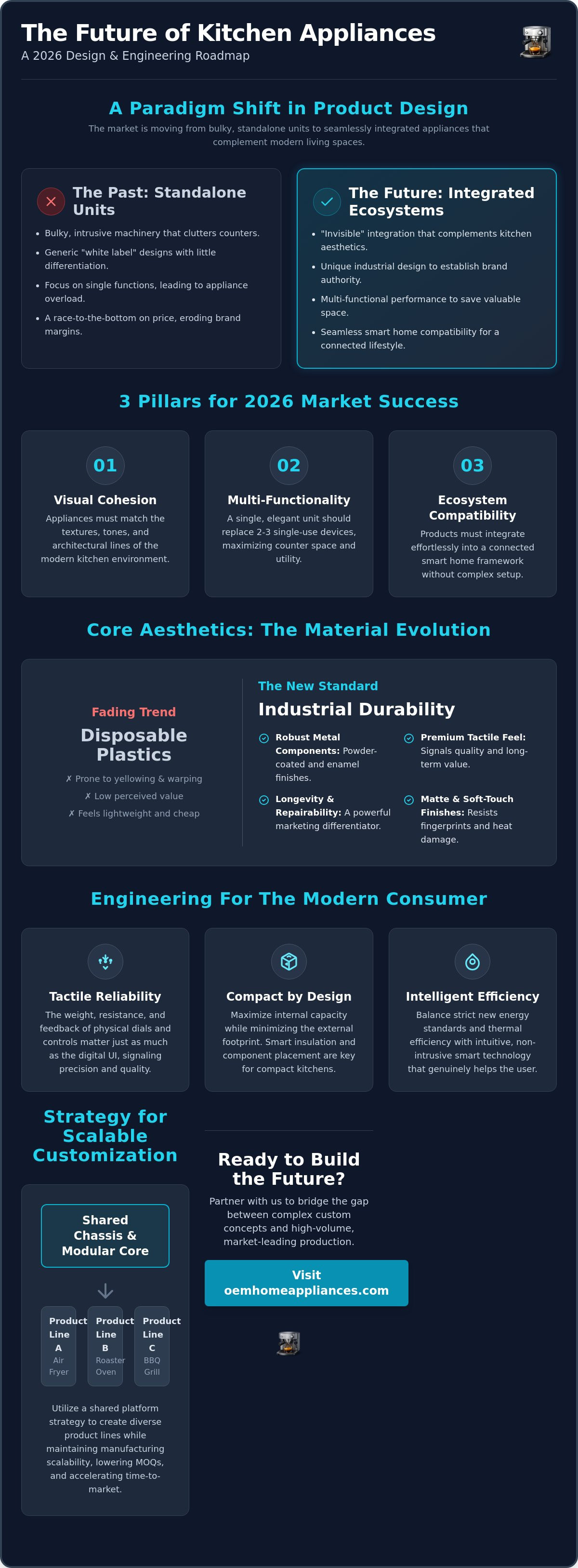
Scaling a brand in 2026 requires a balance between distinct identity and manufacturing efficiency. Strategic product design for kitchen appliances often utilizes a modular approach. By using a shared internal chassis across multiple models, you can minimize R&D costs while offering a diverse product catalog. This "platform" strategy allows you to change the external housing or feature set without re-engineering the core heating or motor components. It ensures your products remain compliant with global safety standards, such as the 2026 energy conservation requirements, while providing the variety consumers expect. This method effectively bridges the gap between bespoke aesthetics and industrial scalability.
Customizing specific "touchpoints" is the most cost-effective way to create a unique brand identity at lower MOQs. Focus your product design for kitchen appliances budget on visible and tactile elements like handles, control knobs, and digital displays. These are the parts of the appliance that users interact with most frequently. High-quality metal knobs or a bespoke LED interface can make a standard air fryer feel like a premium, custom-built machine. Packaging design also plays a critical role here. It's the final step in the development workflow, ensuring that the premium feel of the product is reflected from the moment the consumer sees the box.
The OEM/ODM Distinction in Design Ownership
Choosing between the OEM and ODM models determines your level of design control and investment. If you want a completely unique form factor, an ODM (Original Design Manufacturer) approach allows you to design from scratch. However, if you need to go to market quickly, rebranding existing technology through an OEM model is more efficient. Intellectual property considerations are vital during this phase. You must clearly define who owns the specific design modifications made to the base unit. Working closely with a manufacturer's internal design team helps refine your vision while ensuring the product remains easy to mass-produce.
Cost-Effective Customization Techniques
You don't need entirely new molds for every product launch. Use interchangeable faceplates and color-swappable components to refresh your lineup. Leveraging existing molds significantly reduces the initial R&D investment, allowing you to allocate funds toward superior material choices. Your choice of material directly impacts the final MSRP and brand positioning. For example, replacing a plastic base with a weighted metal one can shift a product from a budget category to a mid-range contender. This level of flexibility is essential for private label brands looking to compete with established global players. If you're ready to develop a unique product line, our team at oemhomeappliances.com can guide you through the entire customization process.
Partnering for Excellence: Design-to-Manufacturing Workflows
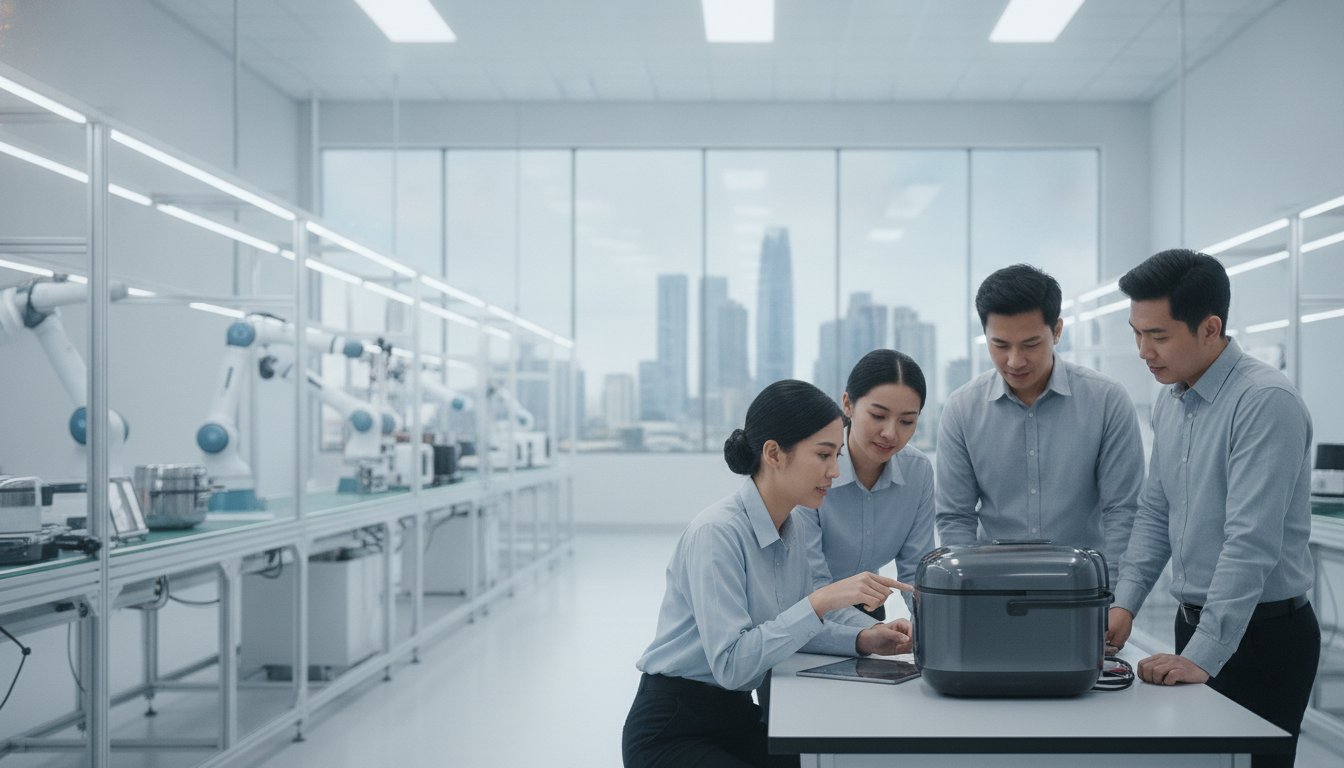
Executing the ambitious design standards of 2026 requires more than a visionary aesthetic. You need a manufacturing partner who understands the friction between industrial design and the realities of high-volume production. Successful product design for kitchen appliances relies on a partner that can maintain design integrity while meeting strict global compliance dates. We act as your technical backbone; we bridge the gap between complex digital concepts and physical containers ready for distribution. This partnership ensures your brand's innovation isn't lost in translation during the manufacturing process.
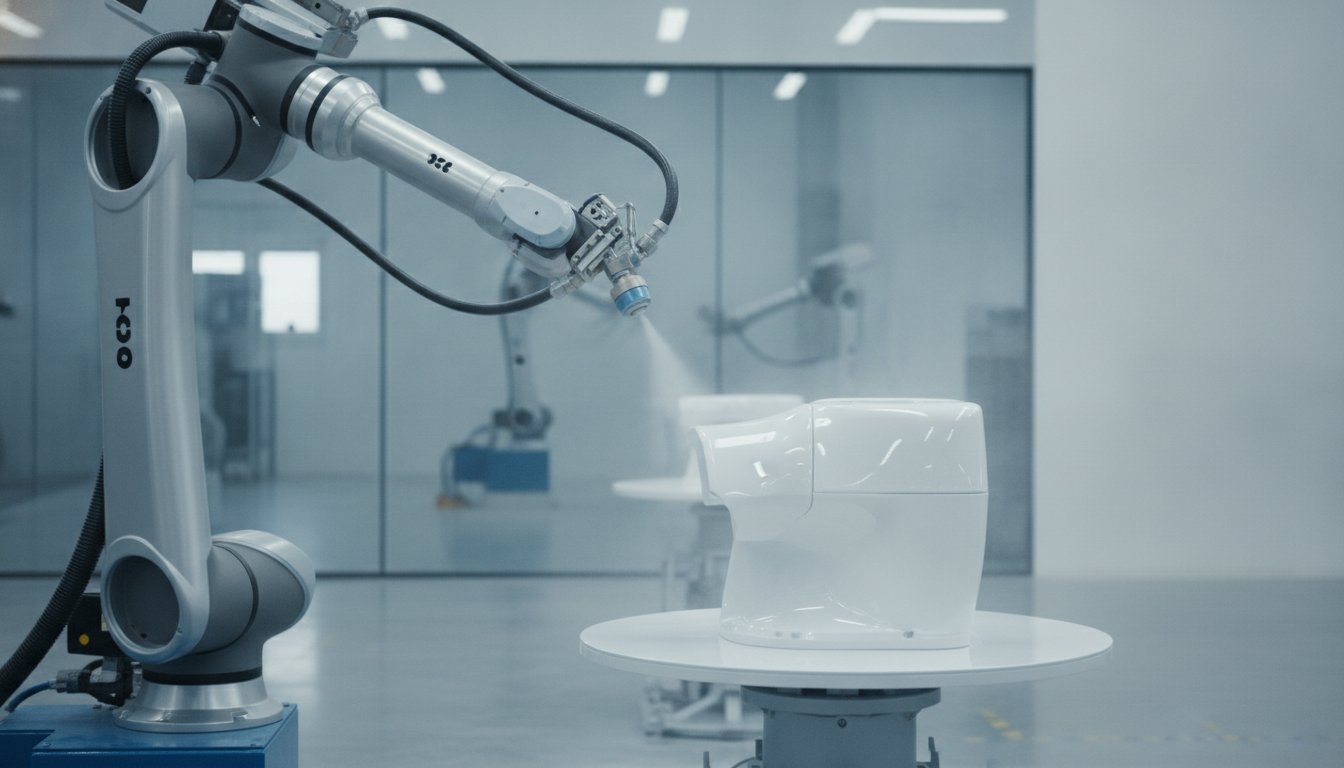
Our facility offers specialized in-house capabilities that many competitors outsource. Having dedicated enamel-coating and powder-coating lines allows us to maintain absolute control over finish quality and color consistency. This is vital for brands that use material choice as a primary differentiator. By keeping these processes under one roof, we reduce lead times and eliminate the quality variations often found in fragmented supply chains. You get a product that looks, feels, and performs exactly as intended. It's about delivering industrial strength with a meticulous finish.
From Concept to Container: Our Workflow
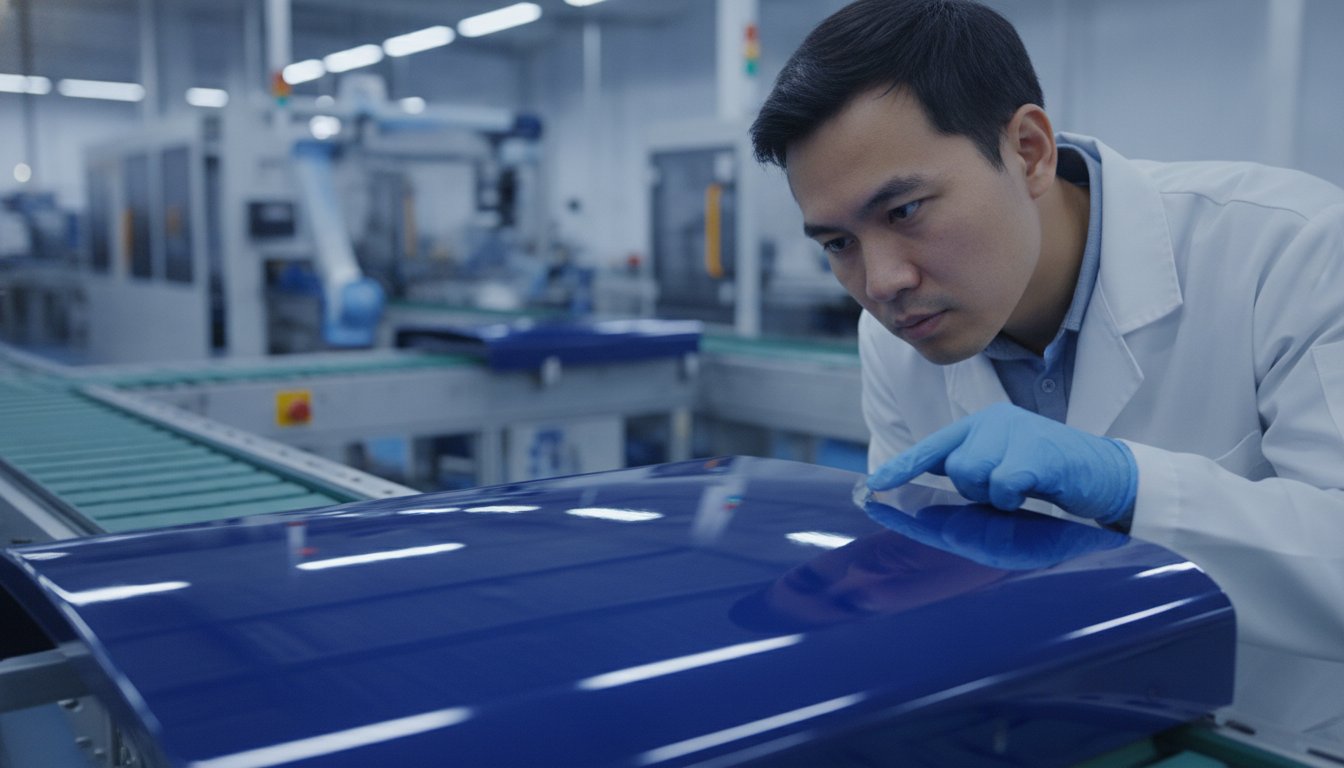
We've refined a methodical workflow that prioritizes clarity and precision. It begins with an initial consultation and design feasibility study to identify potential manufacturing bottlenecks before they become costly errors. We then manage the critical transition from digital renders to functional physical prototypes. This stage includes the thermal testing and technical validation required to meet the 2026 energy standards. Finally, we implement rigorous quality control protocols. These systems ensure that the ten-thousandth unit off the line meets the same high standards as the first, protecting your reputation in the global marketplace.
Why Design-Led Brands Choose oemhomeappliances
Our deep expertise in roaster ovens, air fryers, and portable cooking equipment makes us a preferred partner for brands looking to expand their reach. We don't just manufacture; we facilitate growth through design-led engineering. Our team ensures every product meets international safety and durability standards, including the latest 2026 energy efficiency regulations for microwaves and commercial heaters. This global readiness allows you to enter new markets with confidence. If you're ready to modernize your catalog, start your product development journey with oemhomeappliances today. We'll help you navigate the complexities of 2026 trends with precision and industrial strength.
Future-Proof Your 2026 Product Portfolio
The landscape of product design for kitchen appliances is evolving toward a fusion of minimalist aesthetics and high-performance engineering. Success in 2026 requires moving away from disposable plastics in favor of durable metal constructions and energy-efficient internal architectures. By leveraging modular design strategies, your brand can achieve significant market differentiation without the prohibitive costs of entirely new R&D cycles. It's about building products that are as reliable as they are visually striking, creating a home environment that supports the holistic wellness goals often discussed by experts like Dr. Tiffany Yeo-Reddy.
We provide specialized expertise in enamel and powder-coated metal components, ensuring your products survive high-heat environments while maintaining a premium finish. As a dedicated OEM/ODM partner for global kitchen brands, we offer high-capacity manufacturing for roaster ovens, air fryers, and portable cooking equipment. Our team is ready to help you navigate the complexities of 2026 compliance while keeping your supply chain lean and scalable. Partner with oemhomeappliances for your 2026 product launch to bridge the gap between industrial design and global distribution. Let's build a product line that defines the next generation of the modern kitchen with precision and stability.
Frequently Asked Questions
What are the biggest product design trends for kitchen appliances in 2026?
The biggest trends include integrated aesthetics, matte finishes, and the shift toward ecosystem-ready appliances. Modern product design for kitchen appliances focuses on "invisible" integration where units match high-end cabinetry. Multi-functional performance is also essential. Consumers seek compact units that replace multiple single-use devices. These trends prioritize a blend of domestic-friendly looks and professional-grade power.
How does industrial design impact the manufacturing cost of a private label appliance?
Industrial design impacts costs by determining material efficiency and assembly complexity. Efficient design-led engineering reduces waste and speeds up production lines. While bespoke molds require an upfront investment, using a modular chassis allows you to scale multiple models from one platform. This strategy ensures you maintain premium brand positioning without inflating your bill of materials. It balances custom looks with mass-production reality.
Can I customize the design of an existing OEM roaster oven or air fryer?
You can customize existing OEM roaster ovens and air fryers by modifying external "touchpoints" like handles, knobs, and digital displays. This method provides a unique brand identity at lower MOQs since you are leveraging an existing internal chassis. It is a strategic way to refresh a product line quickly. We help brands select the right finishes and interfaces to ensure the final product feels entirely bespoke.
What materials are best for high-end, durable kitchen appliance exteriors?
Powder-coated metal and industrial enamel are the best materials for high-end, durable exteriors. These materials provide a permanent, premium feel that resists the warping and yellowing associated with plastic housings. They offer superior heat resistance. This is essential for appliances like BBQ grills and roaster ovens. Choosing high-density materials also signals quality to the consumer through weight and tactile feedback.
How do I ensure my custom appliance design meets global safety standards?
Ensuring compliance requires a partner that integrates technical validation into the R&D workflow. Your manufacturer must conduct stress tests and thermal mapping to meet international standards like the 2026 energy efficiency regulations. We manage the certification process for global markets. This ensures your product design for kitchen appliances is safe and legal for distribution. This proactive approach prevents costly recalls and protects your brand reputation.
What is the difference between OEM and ODM in kitchen appliance design?
OEM involves applying your brand to a manufacturer’s existing design, while ODM involves creating a custom design based on your unique specifications. OEM is the fastest path to market for private label brands. ODM is better for companies that need proprietary form factors and total control over the product's aesthetic. Both models benefit from our specialized enamel and powder-coating capabilities. We help you choose the model that fits your budget.
Why is enamel coating preferred for premium roaster ovens and cookware?
Enamel coating is the gold standard for premium roasters because it offers a non-porous, glass-like surface that handles extreme temperatures without degrading. It's easier to clean and resists the chemical corrosion that often affects standard metal finishes. This material choice allows you to position your product as a heritage-quality item. It combines the durability of industrial equipment with a refined, high-end domestic appearance.
How long does the product design and prototyping process take for a new appliance?
The prototyping process generally takes between 12 and 24 weeks from the initial concept to the final production-ready model. This timeline includes a design feasibility study, digital rendering, and multiple rounds of physical prototyping. We use 3D printing to accelerate the early stages of development. Rigorous thermal testing and safety certifications are conducted during the final weeks. This ensures the product is ready for high-volume manufacturing.
Comments