Enamel Coating for OEM Kitchen Appliances: The Ultimate Guide for Brand Managers

What if the biggest threat to your brand's reputation isn't the internal electronics of your product, but the microscopic bond of its surface coating? For brand managers in the high-end market, a single batch of peeling or discolored units can trigger a wave of costly returns and erode years of consumer trust. You already know that standard powder coatings often fail under the intense thermal stress of a roaster oven or BBQ grill. Choosing a high-performance enamel coating for OEM kitchen appliances is no longer just an aesthetic choice; it's a strategic move to ensure long-term product integrity and chemical safety.
In this guide, you'll discover how industrial enamel coating enhances appliance durability, safety, and brand value in large-scale OEM production. We'll examine the shifting regulatory landscape, including new 2026 Danish limits on lead and cadmium, and help you bridge the gap between metal fabrication and specialized finishing. You'll learn how to identify a reliable manufacturing partner that can handle bulk production while maintaining the strict food-safety standards your customers demand. From managing raw material price volatility to achieving a premium, heat-resistant finish, we provide the technical roadmap your brand needs to scale with confidence.
Key Takeaways
Understand why glass-to-metal fusion at 800°C creates a superior bond compared to standard appliance paints.
Discover how enamel coating for OEM kitchen appliances ensures compliance with 2026 safety standards by remaining completely PFOA-free and PTFE-free.
Evaluate the performance of enameled liners and components in high-stress environments like roaster ovens and outdoor BBQ grills.
Use our procurement framework to weigh the durability of porcelain enamel against common alternatives like powder coating and stainless steel.
Streamline your supply chain by choosing a partner that manages both precision metal fabrication and specialized industrial finishing.
Table of Contents
What is Industrial Enamel Coating for OEM Kitchen Appliances?
The Technical Advantages: Why Premium Brands Prioritize Porcelain Enamel
Strategic Applications: From Roaster Ovens to Custom Metal Components
The Procurement Framework: Enamel vs. Alternative Appliance Finishes
Optimizing Your Supply Chain with Specialized Enamel Coating Services
What is Industrial Enamel Coating for OEM Kitchen Appliances?
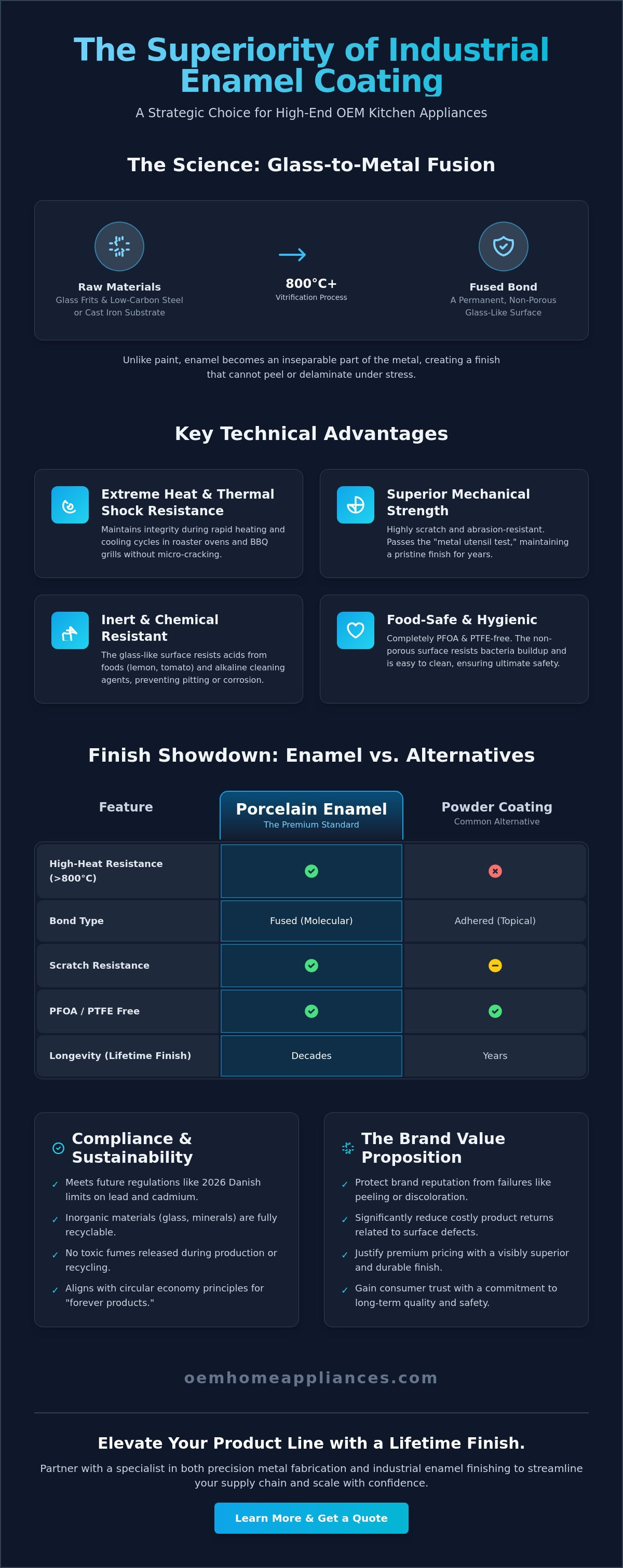
Industrial enamel coating for OEM kitchen appliances is not a topical finish or a standard organic paint. It is a sophisticated manufacturing process where glass is fused to a metal substrate at temperatures exceeding 800°C. This intense heat creates a permanent chemical and mechanical bond. Unlike standard paints that merely adhere to the surface, Vitreous enamel becomes an inseparable part of the appliance itself.
Standard powder coatings or liquid paints rely on organic resins. These resins can degrade, peel, or discolor when exposed to the high heat of a roaster oven or BBQ grill. In contrast, porcelain enamel is inorganic. The "smoothness" often cited by competitors isn't a secondary feature. It's the natural byproduct of high-temperature vitrification. This glass-like surface is non-porous, which makes it resistant to bacteria and easy to clean. For brand managers in 2026, this durability meets the growing consumer demand for "forever" products that outlast cheap, disposable alternatives.
The Science of Glass-to-Metal Fusion
The strength of this coating lies in the interface between the metal and the glass layer. During the firing process, the glass frits melt and flow into the pores of the metal. This creates a bond that prevents delamination even under extreme thermal stress. Vitrification is the specific transformation of raw minerals into a hard, glass-like substance during the heating cycle. Success depends heavily on the base metal selection. Low-carbon steel is common for stamped appliance parts. Cast iron remains the industry standard for high-mass components like heavy-duty BBQ grates. Each material requires a specific frit formulation to ensure a flawless bond.
Sustainability and Longevity in Appliance Design
Enamel is a lifetime finish. It doesn't oxidize or fade under UV light. From a procurement perspective, this longevity reduces the rate of surface-related product returns. It protects your brand's bottom line and reputation. Enameled components are also fully recyclable at the end of their life cycle. Because the coating consists of glass and minerals, it doesn't release toxic fumes during the recycling process. This aligns with the 2026 market shift toward circular economy principles and transparent chemical safety. Choosing enamel coating for OEM kitchen appliances allows brands to market a product that is both high-performing and environmentally responsible.
The Technical Advantages: Why Premium Brands Prioritize Porcelain Enamel
Premium brands prioritize long-term performance over short-term cost savings. While powder coating serves entry-level products, enamel coating for OEM kitchen appliances provides the structural resilience required for the high-end tier. This finish handles the most aggressive kitchen environments without compromising its physical state. It acts as a protective shield that preserves both the appliance's function and its visual appeal over decades of use.
Thermal shock resistance is a primary differentiator. In a busy kitchen, appliances undergo rapid heating and cooling cycles. Enamel maintains its bond during these fluctuations, preventing the micro-cracking common in lower-grade finishes. The Porcelain Enamel Institute (PEI) notes that this durability makes it the preferred choice for surfaces exposed to extreme heat and rapid temperature shifts. Beyond temperature, the material is essentially glass. It resists chemical attacks from acidic food spills like lemon juice or tomato sauce, as well as the alkaline chemicals found in heavy-duty degreasers. This inert nature ensures the surface won't pit or corrode when exposed to fats and oils.
Mechanical strength is equally critical for brand longevity. Enamel surfaces are famously scratch-resistant. Consumers often use metal utensils that would instantly ruin a synthetic non-stick surface. Porcelain enamel survives the "metal utensil test," maintaining a pristine finish even after thousands of cycles of use. This abrasion resistance ensures that your product remains a centerpiece in the customer's kitchen rather than a source of frustration. If you are looking to elevate your product line, consider how enamel-coated products can differentiate your brand in a crowded market.
Food Safety and Non-Toxic Standards
Consumer preferences in 2026 have shifted decisively toward chemical transparency. Synthetic coatings containing PFOA or PTFE face increasing scrutiny and regulatory pressure. Enamel provides a naturally non-toxic, non-porous alternative. Because it is inorganic, it doesn't harbor bacteria or leach chemicals into food. Meeting global compliance standards for food-contact surfaces becomes significantly simpler when using a material that is inherently inert. It offers a hygienic surface that consumers can trust for daily food preparation.
Color Stability and Aesthetic Customization
Visual appeal is the first thing a buyer notices on the showroom floor. Enameled finishes offer superior UV resistance, meaning colors won't fade or yellow over time, even in sunlit kitchens. You can customize the finish to match your brand's specific identity, whether you require a high-gloss vibrant red, a sophisticated matte black, or a classic speckled texture. The physical weight and cold-to-the-touch feel of enamel provide a "premium" sensory experience that plastic or thin-film coatings can't replicate. This perceived value justifies a higher price point and strengthens brand loyalty.
Strategic Applications: From Roaster Ovens to Custom Metal Components
Strategic integration of enamel coating for OEM kitchen appliances transforms standard hardware into premium consumer goods. It is no longer just for bakeware. Modern manufacturing applies these finishes to the core structural elements of complex appliances. This ensures that the components most exposed to heat, moisture, and friction maintain their integrity for the life of the product.
BBQ grills demand the highest level of surface protection. They endure direct flame contact and outdoor humidity simultaneously. Enamel coating provides a barrier against oxidation and corrosion that standard powder coating cannot match. It ensures that grates and lids don't rust after a single season of exposure. This durability is vital for brands looking to reduce warranty claims on outdoor cooking equipment.
For rice cookers and air fryers, the internal pot is the primary touchpoint for the consumer. Enamel provides a non-porous, PFOA-free surface that resists the high-velocity air and heat of modern cooking cycles. It facilitates easy cleaning without the risk of synthetic coating flakes entering the food. This material choice allows brand managers to market a "clean cooking" experience that aligns with current health trends.
Engineering Roaster Ovens for High Performance
Roaster ovens require precise thermal management to deliver consistent results. Enameled interior liners improve heat retention by creating a consistent radiant surface. This ensures even cooking for large-volume meals, which is a key selling point for high-capacity equipment. Coating thickness is a critical variable in this process. If the coating is too thin, you risk thermal stress cracks; if it is too thick, you increase the energy required to reach temperature. Adhering to technical standards, such as the EPA guidelines for porcelain enameling, ensures that the industrial process remains efficient and compliant. You can explore our specialized approach to Engineering Performance: Inside Modern Roaster Ovens to see how we optimize these internal liners.
Enamel Coated Components for Portable Cooking
Portable cooking equipment presents a unique engineering challenge. Brand managers must balance the extreme durability of enamel with the need for lightweight portability. We achieve this through precision metal fabrication and controlled application. By using high-strength, thin-gauge steel and a single-coat enamel process, we maintain impact resistance without adding unnecessary bulk. This applies to handles, lids, and specialized metal parts that define your brand's aesthetic. Customizing these finishes allows you to maintain a consistent premium feel across your entire portable product line.
The Procurement Framework: Enamel vs. Alternative Appliance Finishes
Strategic procurement requires a clear understanding of where to invest in premium finishes and where to optimize for cost. Enamel coating for OEM kitchen appliances represents a higher initial investment compared to standard organic coatings. However, this cost is offset by superior heat resistance and surface longevity. Brand managers must evaluate each component based on its proximity to heat, food contact requirements, and expected mechanical wear. A miscalculation in the finishing stage often leads to surface failure, which is one of the leading causes of product returns in the small appliance sector.
Stainless steel is often viewed as the primary alternative for high-end goods. While stainless offers a modern aesthetic, it is susceptible to scratching and requires constant maintenance to prevent fingerprints and smudges. Enamel provides a more resilient, easier-to-clean surface that maintains its "out-of-the-box" appearance for years. It doesn't oxidize or tea-stain like lower grades of stainless steel might in humid kitchen environments. When your product line demands a "forever" finish that withstands both 400°C temperatures and abrasive cleaning, porcelain enamel is the only technically viable solution.
Selection criteria for premium finishes should follow a strict hierarchy of needs. If a component faces temperatures exceeding 200°C, enamel is mandatory to prevent outgassing and peeling. If the surface will come into direct contact with food, the chemical inertness of glass-to-metal fusion provides the safest consumer experience. For secondary components that face less stress, other methods can be considered to balance the production budget. To find the right balance for your specific product line, consult with our OEM production experts to review your technical specifications.
When to Choose Powder Coated Metal Components
Not every part of an appliance requires the extreme thermal resistance of porcelain enamel. Exterior housings, control panels, and decorative trim are often better suited for powder-coated metal components. This finish offers a vast array of color options and textures at a lower price point. It provides excellent corrosion resistance for parts that don't come into direct contact with high heat or food. By utilizing a hybrid approach, brand managers can allocate their budget to high-performance enamel where it matters most while maintaining cost-efficiency on secondary surfaces. You can learn more about our Durability Standards for Powder Coated Metal Components to see how we ensure quality across all finishes.
The ROI of Premium Finishing
Calculating the return on investment for high-end coatings requires looking beyond the bill of materials. You must consider the Total Cost of Quality (TCQ). This includes the expense of warranty claims, product returns, and the secondary costs of negative consumer reviews. A single batch of failing surfaces can decimate a brand's quarterly profit. Just as industrial operations rely on BioKem Oil Services to prevent equipment failure through oil purification, investing in premium enamel reduces these risks significantly. Superior surface finishes build a foundation of trust that transforms first-time buyers into lifelong brand advocates. High-quality coatings directly influence a consumer's willingness to pay a premium price.
While the OEM sector focuses on appliance components, the same principles of surface longevity apply to the entire kitchen ecosystem. For those in the residential market seeking to replicate this level of quality, Cabinet refinishing Denver offers professional refinishing that meets the high aesthetic and performance standards expected in modern kitchens.
Optimizing Your Supply Chain with Specialized Enamel Coating Services
Consolidating your supply chain is the most effective way to reduce production lead times and surface defects. When you partner with a manufacturer that manages both metal fabrication and enamel finishing, you eliminate the logistical friction of transporting raw components between facilities. This integrated approach ensures that the metal substrate is perfectly prepared for the specific frit formulation used in enamel coating for OEM kitchen appliances. It results in a more resilient bond and a lower rejection rate during the final inspection phase.
Quality control for enameled products requires rigorous, standardized protocols. We implement adhesion tests to ensure the glass-to-metal bond meets industrial specifications. Thermal shock testing is mandatory for components used in BBQ grills and roaster ovens to simulate real-world usage. These methodical checks allow oemhomeappliances to act as the silent engine behind leading global kitchen brands, delivering consistent quality at scale. We provide a single point of accountability from the first sheet of steel to the final packaged unit.
Scalability depends on a partner's ability to transition seamlessly from low-volume testing to high-volume output. Our infrastructure supports this growth by maintaining precision even as order sizes increase. We understand the nuances of private labeling and rebranding, offering the flexibility needed for diverse product lines. This corporate readiness positions us as a dependable backbone for businesses looking to expand their market share without compromising on build quality.
Bespoke Manufacturing and R&D Support
Prototyping is a non-negotiable step in successful appliance design. It allows brand managers to verify coating success and aesthetic consistency before committing to mass production. Our R&D team provides specialized Technical Solutions for New Appliance Development, helping you navigate the complexities of material selection and firing temperatures. This phase identifies potential engineering bottlenecks early, saving significant costs during the transition to high-volume manufacturing. We work as a flexible service provider to adapt to the specific needs of your brand's next innovation.
Partnering for Global Distribution
Consistent quality across large-scale bulk orders is the hallmark of a reliable OEM partner. We manage the logistics of worldwide shipping, ensuring that specialized enameled appliances reach their destination without surface damage. Whether you're scaling a new line of air fryers or expanding your portable cooking gear collection, our facility is equipped for rapid scalability. We prioritize clarity and efficiency in every communication, driving your project toward a successful market launch. Ready to elevate your production? Contact our team for a custom quote on enamel-coated appliance manufacturing today.
Elevate Your Product Tier with Precision Finishing
Selecting the right enamel coating for OEM kitchen appliances is a decisive step in moving your brand into the premium market tier. We've explored how the glass-to-metal fusion process solves critical industry challenges, including thermal damage and chemical safety. By prioritizing thermal shock resistance and inertness, you ensure your products meet strict 2026 food-safety standards while significantly reducing return rates. It's the most effective way to build long-term consumer trust.
Success in large-scale production depends on a partner that understands the nuances of both metal fabrication and specialized finishing. We operate specialized enamel and powder-coating facilities designed to empower global brands. Our deep expertise in roaster oven and portable cooking equipment R&D allows us to act as the silent engine for your growth. We provide the stability and precision required to scale your operations across international markets with confidence.
Take the next step in optimizing your supply chain and enhancing your product's perceived value. Scale your brand with expert OEM enamel coating services and secure your position as an industry leader. We're ready to help you build a more durable future.
Frequently Asked Questions
Is enamel coating safe for food-contact kitchen appliances?
Yes, porcelain enamel is one of the safest materials for food-contact surfaces because it is completely inorganic and chemically inert. It doesn't contain PFOA, PTFE, or other synthetic chemicals that can leach into food at high temperatures. The glass-to-metal bond creates a non-porous surface that resists bacterial growth and doesn't absorb odors. This makes enamel coating for OEM kitchen appliances an ideal choice for brands prioritizing consumer health and safety.
What is the difference between porcelain enamel and ceramic coating?
The primary difference lies in the firing temperature and the nature of the bond. Porcelain enamel is fused to metal at temperatures exceeding 800°C, creating a permanent chemical bond through vitrification. Ceramic coatings, often referred to as sol-gel, are typically cured at much lower temperatures and rely on a mechanical bond. While ceramics offer good initial non-stick properties, porcelain enamel provides significantly higher long-term durability and superior resistance to high thermal stress.
Can enamel coating be applied to all types of metal components?
Enamel coating is most successful when applied to specific substrates like low-carbon steel or cast iron. These metals possess the necessary thermal expansion coefficients to match the enamel frit during the firing process. While it's possible to coat certain grades of aluminum or stainless steel, they require specialized frit formulations and precise temperature control. Choosing the correct base metal is essential to prevent delamination or surface defects in high-volume production environments.
How does enamel coating handle high temperatures in roaster ovens?
Enamel handles extreme heat exceptionally well because it is fundamentally a glass finish fused at high temperatures. It maintains its structural integrity and color even when exposed to constant temperatures of 400°C or higher. In roaster ovens, the coating provides excellent radiant heat distribution, which ensures even cooking results. Unlike organic paints, it won't smoke, outgas, or peel when the appliance reaches its maximum operating temperature.
Is enamel coating more durable than standard powder coating for appliances?
Enamel is significantly more durable than powder coating in environments involving high heat, moisture, or abrasive cleaning. Powder coating is an organic resin that can melt or discolor under thermal stress. Enamel is an inorganic glass layer that resists scratching from metal utensils and chemical damage from acidic foods. While powder coating is cost-effective for exterior housings, enamel is the superior choice for any component facing intense heat or direct food contact.
What are the common quality control tests for OEM enameled products?
Standard quality control protocols include the impact test for adhesion and the thermal shock test to ensure the coating won't crack during rapid temperature changes. Technicians also perform acid and alkali resistance tests to simulate long-term exposure to detergents and food acids. Thickness gauging ensures the enamel layer is within the specified micron range for the component's intended use. These rigorous checks guarantee that every batch meets the reliability standards expected by global brands.
Why is enamel preferred for BBQ grills and outdoor cooking equipment?
Enamel is the preferred finish for outdoor cooking because it provides a weatherproof barrier that prevents rust and corrosion. It withstands direct flame contact and the aggressive carbon buildup associated with grilling without degrading. The smooth, glass-like surface also makes it much easier for consumers to clean off burnt-on grease and food particles. This combination of weatherproofing and heat resistance ensures that BBQ components don't deteriorate after a single season of use.
Does enamel coating contribute to the energy efficiency of an appliance?
Enamel coating for OEM kitchen appliances improves energy efficiency by enhancing the emissivity and heat retention of metal components. In appliances like rice cookers or roaster ovens, the enameled surface reflects and holds radiant heat more effectively than bare metal or thin organic coatings. This leads to more stable internal temperatures and reduced energy consumption during the cooking cycle. It allows the appliance to reach the desired temperature faster and maintain it with less power.


Comments